Infant-Directed Speech: Why Parentese Works
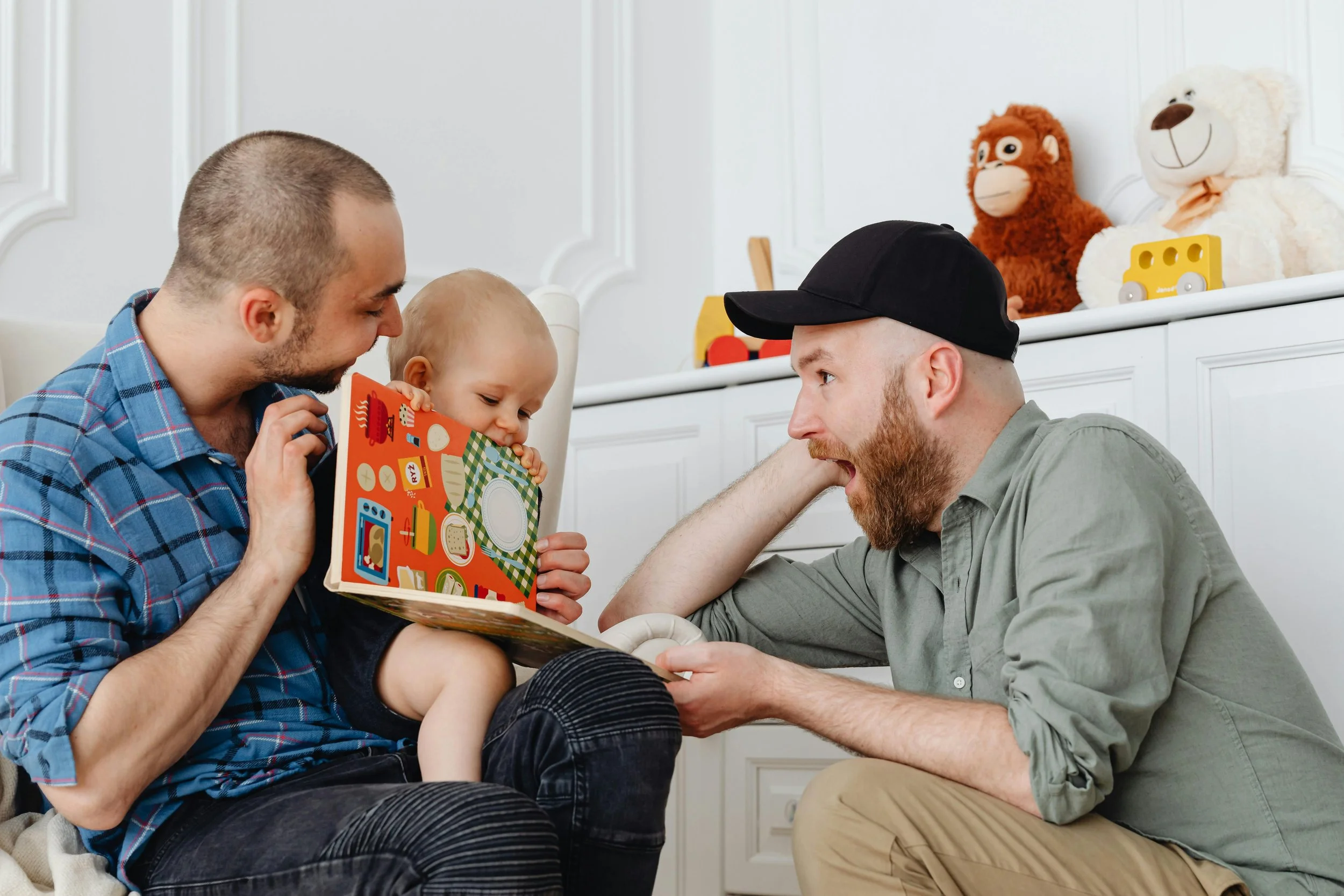
Parenting is a vulnerable journey. And if there’s one thing parents can’t seem to escape, it’s judgement about their choices. Should I stay home or work? Are they getting enough tummy time? What will people say if they find out if I’m still breastfeeding? One area in which mixed messages proliferate is how to talk to your children. Some argue that talking to your babies and toddlers like little adults will help them develop language best. Others argue that babies can’t process full sentences. In reality, the most developmentally appropriate way to talk to your children is somewhere in between.
Classic “baby talk” usually consists of made-up words and overly simplified or grammatically incorrect sentences. For example, parents might say, “wah wah” for “water” or ask, “does baby want choo choo?” While it is true that babies and toddlers require shortened and simplified phrases, we want to be mindful of modeling improper speech, especially when too many real words are replaced. Instead, using infant-directed speech—sometimes called “parentese” or “motherese”—is preferred.
Parentese is a science-backed way of speaking that retains the warmth and simplicity of baby talk while promoting speech development. It uses a high-pitched voice, slower pace, and clear enunciation of simple, but grammatically correct sentences. It also uses repetition of real words to model vocabulary. Most adults use this sing-songy, exaggerated intonation instinctively, they just don’t realize the power that it holds. In fact, research shows that babies prefer this style of speaking. Slow, clear speech helps babies and toddlers discriminate sounds, contributing to language development. The key difference between baby talk and parentese is the use of real words and grammatically correct sentences. By modeling proper speech in an attention-grabbing, emotionally expressive tone, parentese helps build a strong vocabulary and well-developed language skills.
So, when do I use parentese? The importance of talking to your babies and toddlers, even before they can respond, cannot be overstated. Narrating daily routines builds vocabulary, helps connect words to meaning, and enhances joint attention. Speaking out loud to your children, including describing your actions and theirs, also helps them build an internal monologue. This is important for self-regulation, problem-solving, and planning. The unique intonation of parentese amplifies these effects.
Parentese is also a powerful tool for scaffolding language development. When your child starts to babble, imitating them in a sing-songy tone helps them learn the back and forth nature of communication. The positive emotional expression of parentese helps reinforce their use of language to communicate, as well. As your children start to use words and sentences, you can use this speech pattern to reflect their meaning while correcting their speech in a gentle way. For example, if your toddler says, “wah wah,” you can say, “Yes, wah wah, that’s water!” This is also useful for modeling appropriate emotional reactions. For instance, if something gets knocked over, you can use parentese to say, “It fell, but that’s okay. We can pick it up.” This describes the situation while modeling an appropriate response.
Remember, parentese isn’t about perfection. It’s about connection. By modeling language and reflecting your child’s speech with warmth, you can help your child grow in a supportive, nurturing environment.