

Insights From Our Experts
Perspectives and practical guidance on learning, development, mental health, and supporting children and families.
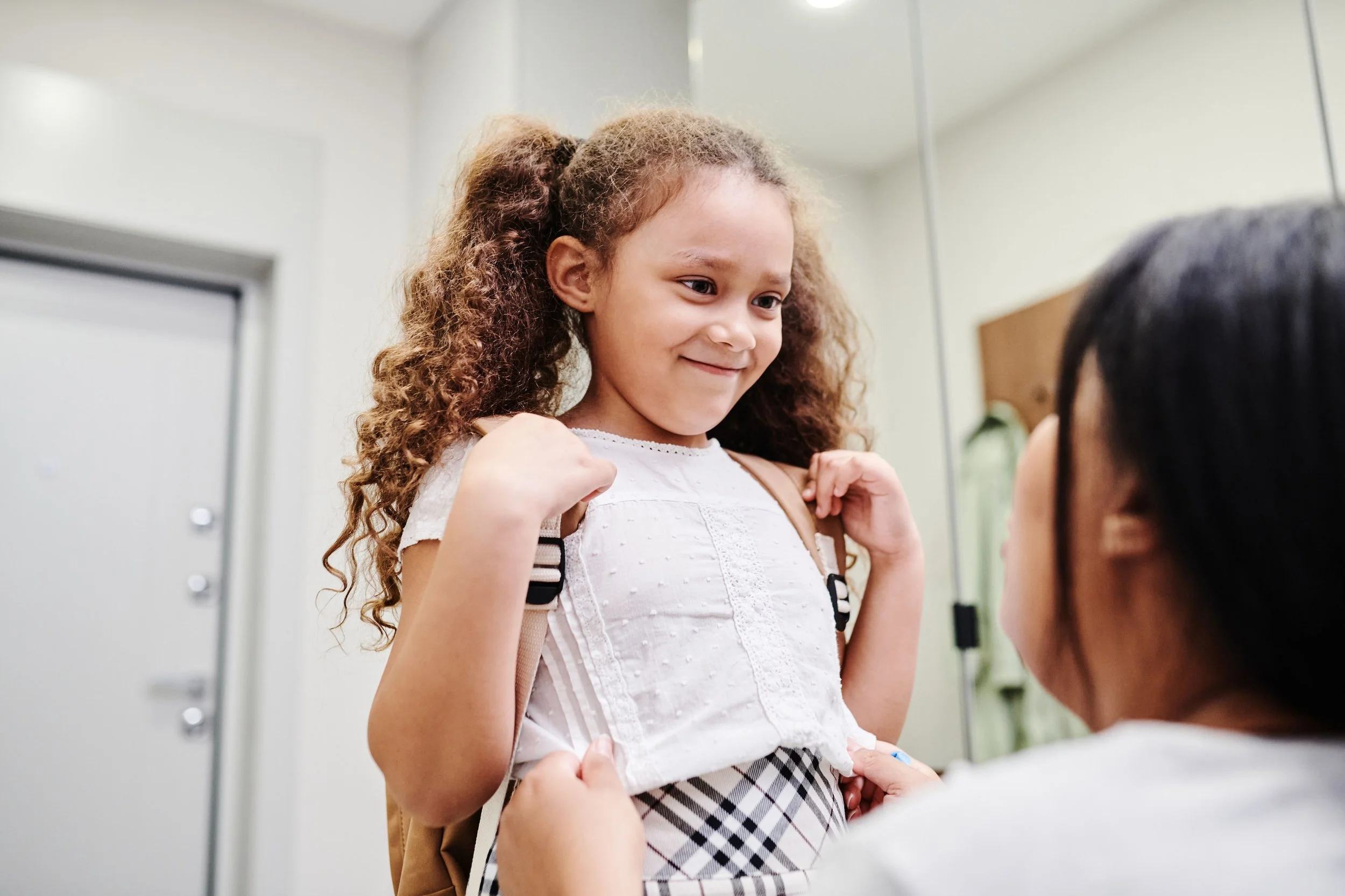
Navigating Back-to-School Emotions: A Guide for Parents
The transition back to school can bring excitement, uncertainty, and everything in between. Whether your child is eager to return or feeling anxious about the changes ahead, parents play an important role in helping them navigate the adjustment. Learn practical strategies to support your child by validating emotions, strengthening connection, and creating a positive foundation for the new school year.

MythBusters: Understanding OCD in Children
Obsessive-Compulsive Disorder (OCD) is often misunderstood. In popular culture, it’s frequently portrayed as a quirky obsession with cleanliness or order — the person who “just loves things neat.” Phrases like “I’m so OCD” have even become part of everyday language.

When Your Thoughts Become a Trap
There is only one way to travel it safely: knowing what to expect and then defusing the inevitable traps. You might be surprised at the notion that our automatic thoughts can be a major force in how we feel and what we do. Just like anything else, we learn how to think as we grow. This becomes a pattern over time, forming strong connections in our brains. As we process the information we take in, it’s filtered through these pathways. This is how automatic thinking occurs. There are various ways in which we can learn to think, so let’s discuss the various negative thinking traps we can fall victim to.

Reassurance Seeking vs. Information Seeking: Coping with Uncertainty
As adults and parents, it's our job to provide kids with the information they need about the world. Sometimes, when kids come to us they might already have the information they need and are still seeking an answer. During these times, they may be looking to us to help make them feel better about something that feels uncomfortable, despite already knowing what will happen. This is what we call reassurance seeking.

Helping Kids Develop Positive Self-Talk
Parents often wonder how to effectively promote socio-emotional resilience and high self-esteem in their children. In a world where we frequently compare ourselves to others or are being compared by others, it’s easy to feel confident about one ability while feeling discouraged about another. When thinking about facilitating your child’s positive self-talk, consider the importance of language. It’s essential to be mindful of the words we use with our children, how we express those words (e.g, tone), and what nonverbal messages we are conveying our children.

ADHD and the Role of Negative Feedback
Attention-Deficit/Hyperactivity Disorder (ADHD) is often thought of as simply a disorder of inattention or hyperactivity by the average person. However, ADHD is actually a disorder of overall regulation. These symptoms have the potential to bring a broad spectrum of challenges. What can make things even more complicated is navigating these challenges with a regular stream of negative feedback coming from seemingly all directions.

More Common than you Think: Learning Disorders & Anxiety
Often times, children with learning difficulties experience heightened symptoms of anxiety. The academic struggles combined with (real or imagined) social, emotional, or behavioral fears can become debilitating for a child. As a parent, it is hard to see your child suffering academically, emotionally, and socially. Therefore, gaining a better understanding of the connection between learning disorders and anxiety is a vital step in aiding your child and increasing their confidence and overall ability.

Understanding Cognitive Behavior Therapy (CBT)
Cognitive-behavioral therapy is one of the most well-supported treatments for depression and anxiety amongst children, teens and even adults. This type of therapy is widespread, as its name has made its way into our everyday language and popular culture. But, what really is it? When your child is receiving CBT for anxiety, attention-deficit/hyperactivity disorder (ADHD), depression or a related disorder, what are they doing? What’s the special sauce that makes this treatment so effective?

The Power of Reflection: Slowing Down and Listening
Reflections are repetitions of what your child has just said. This can be a verbatim repeating of what they have shared or a summary. Using reflections during dysregulated moments helps your child to slow down their own thoughts and big feelings while also allowing them to feel heard by letting them know that you’re listening to them.

Family Accommodation and Anxiety
Accommodation is any change a parent makes to their own behavior to help kids avoid or lessen anxiety. Typically, these changes come from a caring and loving place, one where parents don’t want their kids to be distressed. In actuality, accommodation often shows kids that they cannot face their anxieties and they need others to step in to fix their problems. To figure out if accommodation plays a meaningful role in your family, ask yourself a few questions.

Coping with Back to School Anxiety During COVID-19
Going back to school can be an exciting time for some students and their families, but can be a period of anticipation and worry for others. The latter has been the case for more students lately, as the last year and a half has changed the meaning of “back to school.” Feeling anxious about this upcoming change and the uncertainty of what school will look like this fall is typical. There are ways you can help your child cope and adjust with this upcoming change.

Managing Separation Anxiety in the New School Year
It’s natural and appropriate for all young children to feel separation anxiety while separating from their caregivers. Children long to be close to their caregivers and separating from them threatens their sense of security, which creates feelings of worry and distress. For some kiddos, the distress of separating from their caregiver becomes more severe, which can interfere with daily life. Often, this leaves caregivers feeling low on options and overwhelmed. Navigating separation anxiety is a balancing act of managing the child’s desire to be close while providing encouragement towards independence.

Recognizing Anxiety in Kids
Anxiety is like an internal smoke detector, but instead of only going off when there is smoke, it sets off many false alarms. For some people, their smoke detector goes off when danger is present and they need to stay safe. Other people experience frequent false alarms and have difficulty resetting. Imagine a smoke detector that goes off each time you use the toaster or microwave. Some alarms go off easier than others and it works the same way across people.

Selective Mutism Lingo: Understanding Treatment for SM
Selective Mutism (SM) is an anxiety disorder characterized by consistent failure to speak in specific social situations. Kids with SM may struggle to speak at school, with adults, or with peers. They may have difficulty sharing personal information or making choices. Unfortunately, SM is not widely understood and neither are the important concepts that guide treatment for SM. Being a good consumer of treatment options will help you to be the best advocate for your child.

MythBusters: Selective Mutism Edition
Selective Mutism (SM) is an anxiety disorder where a child is unable to speak in certain social situations, despite being able to talk in others. There is a noticeable and significant shift in a child’s speech across different settings.