

Selective
Mutism
Helping children find their voice across the places, people, and situations that matter most.

What to Expect
Selective mutism treatment helps children gradually build comfort and confidence with speaking through a step-by-step, individualized approach. Parents receive live coaching and learn practical strategies to support communication in everyday interactions, allowing progress to continue well beyond the therapy room. Treatment often begins with intensive sessions and expands into schools and other real-world settings as children gain experience communicating across environments.
Selective Mutism Services
-
Individual Intensive Treatment
Our individualized PCIT-SM treatment helps children gradually build comfort and confidence with speaking through intensive, personalized support. Using live parent coaching and step-by-step practice, parents learn the same evidence-based strategies used in session so they can create meaningful opportunities for communication throughout everyday life. Intensive sessions help establish early success and momentum with ongoing recommendations tailored to each child's progress and needs, which may include school consultation, school intensives, group treatment, parent consultation, or continued individual therapy.
-
School Consultation
Our school consultation services help ensure that progress extends beyond the therapy room. We collaborate with teachers and school staff by providing training, developing individualized speaking plans, attending school meetings, and offering ongoing consultation to support communication goals. Consultation can be provided on a regular basis or as needed throughout treatment.
-
School Intensives
School intensives bring PCIT-SM directly into the classroom, where children can practice speaking in the environments that matter most. Our clinicians provide real-time coaching and support during the school day, creating individualized opportunities for successful communication while partnering with teachers to help children generalize their speaking skills in everyday school routines.
-
Group Treatment
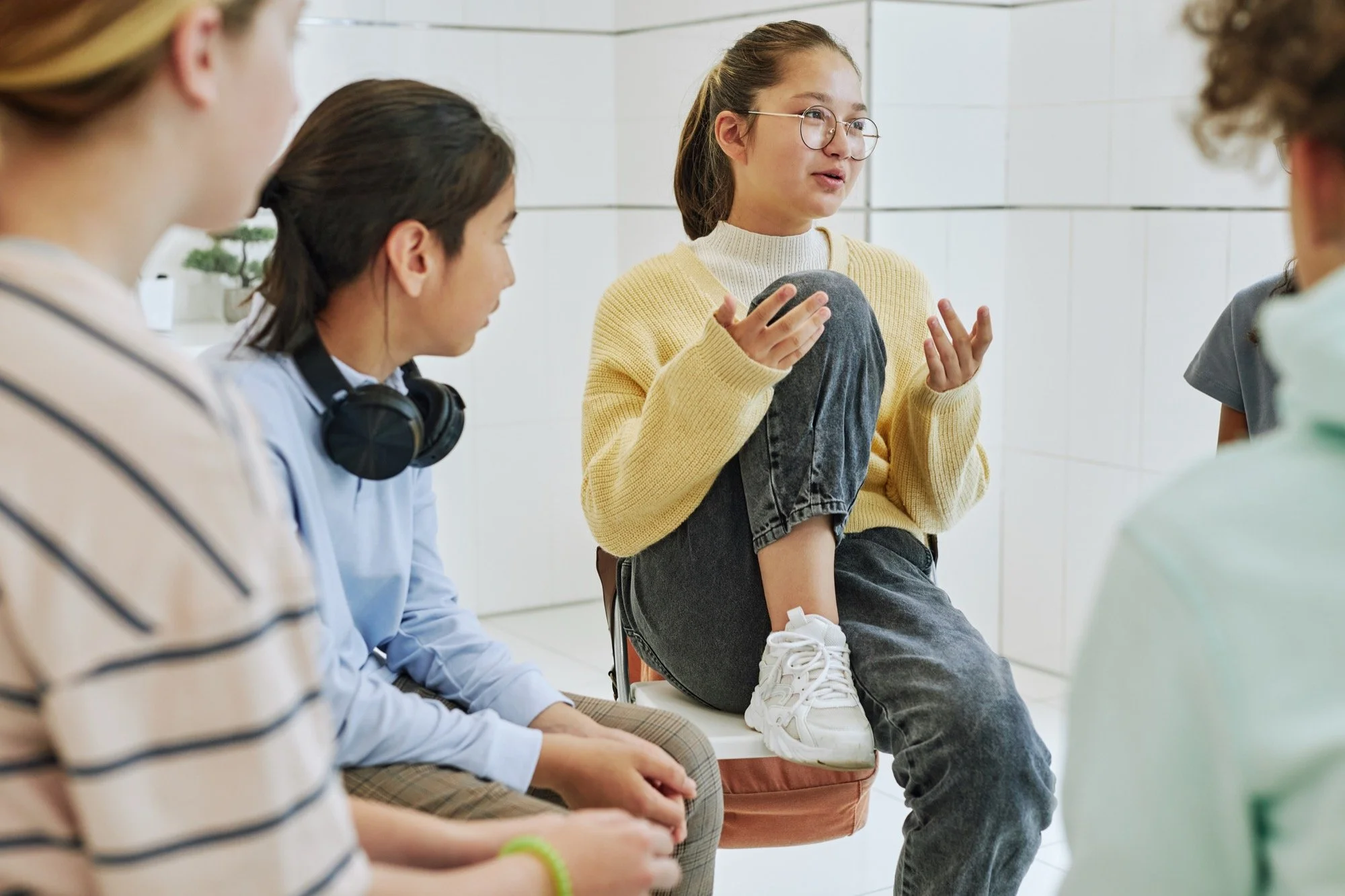
Group treatment gives children the opportunity to practice communication with peers in a structured, supportive environment. Through engaging activities and guided practice, children strengthen higher-level communication skills such as initiating conversations, maintaining back-and-forth interactions, asking questions, and ordering or speaking independently in social situations.


Questions about
Selective Mutism
-
Selective Mutism is an anxiety disorder in which a child is able to speak comfortably in some settings, such as at home, but has difficulty speaking in other situations, like school or around unfamiliar people. Children with Selective Mutism want to communicate but experience anxiety that makes speaking feel overwhelming.
-
Parent-Child Interaction Therapy for Selective Mutism (PCIT-SM) is an evidence-based treatment that helps children gradually become more comfortable speaking. Through live parent coaching, individualized practice, and gradual exposure to new speaking situations, children learn to communicate more confidently across home, school, and community settings.
-
Treatment is individualized to each child's needs. Many families begin with intensive PCIT-SM sessions to build early momentum, followed by ongoing recommendations that may include school consultation, school-based intensives, group treatment, parent consultation, or continued individual therapy.
-
Intensive treatment allows children to practice speaking more frequently at the beginning of therapy, helping them build confidence and momentum more quickly. Because progress with Selective Mutism often depends on repeated successful speaking experiences, an intensive format can accelerate skill development and make it easier to generalize gains across home, school, and community settings.
-
Parents are an essential part of the PCIT-SM model. Through live coaching, they learn evidence-based strategies to create opportunities for communication during everyday routines. Because children spend far more time at home and in the community than in therapy, empowering parents to support communication outside of sessions is a key part of treatment.
-
We regularly collaborate with teachers and school staff by providing consultation, attending school meetings, developing individualized speaking plans, and offering school-based intensive sessions when appropriate. Our goal is to help children successfully use their communication skills in the classroom and other school settings.
