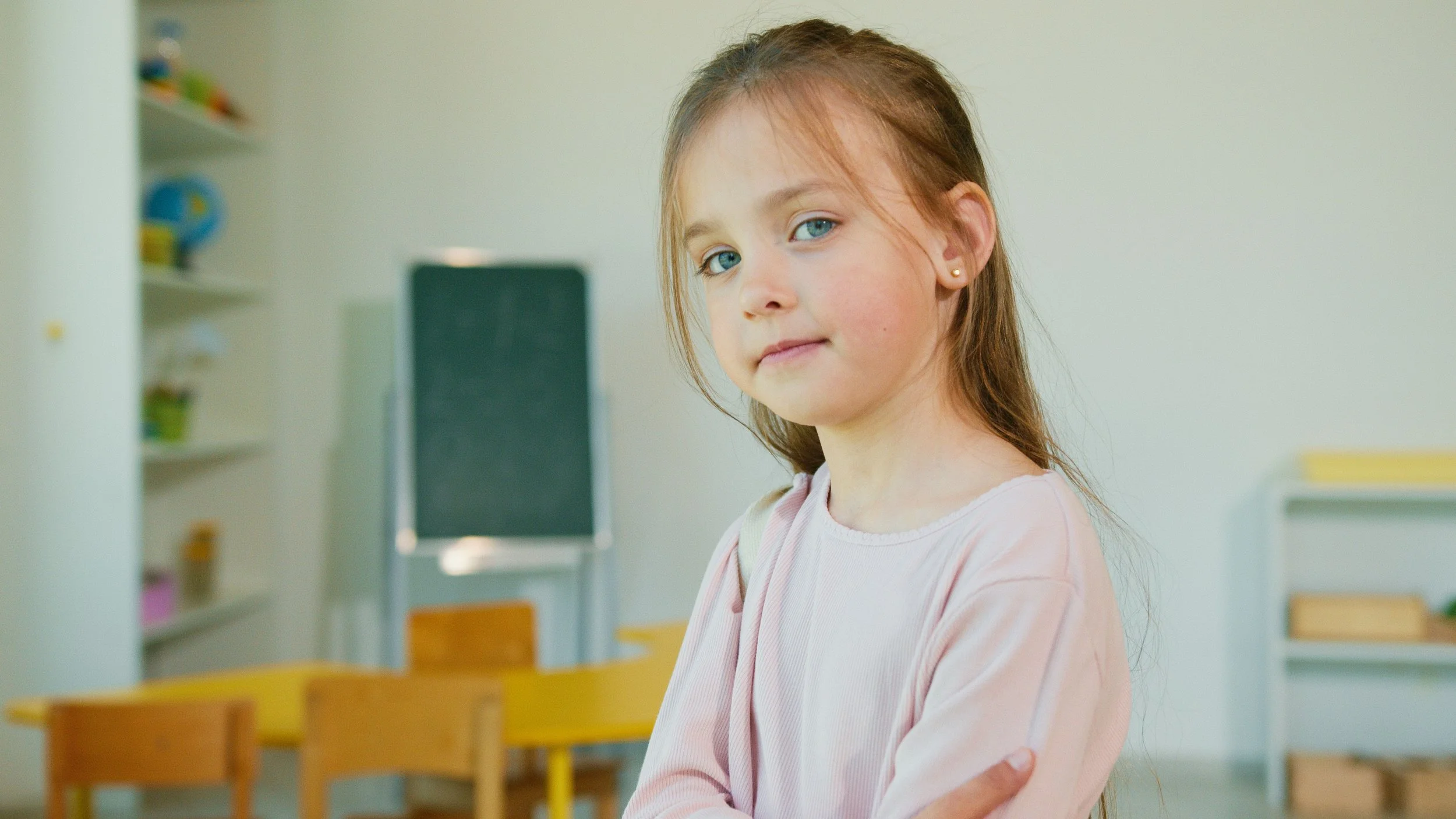
Autism does not always look the way people expect it to.
Some children show clear differences in social communication, flexibility, and behavior from an early age. Their parents may recognize that something about their development is different well before they enter school, and the question of autism emerges relatively early. For other children, the picture is much less obvious.
They may be bright and highly verbal. They make eye contact. They are socially interested and genuinely want friends. They may do well academically, participate appropriately in class, and interact comfortably with adults. Some have close friendships and can describe, often quite thoughtfully, what makes someone a good friend. If you spend 30 minutes talking with them, there may be little that immediately suggests autism. And yet, something does not quite fit.
Their parents may describe a child who has always seemed somewhat out of step socially despite wanting very much to connect with others. Friendships may form but repeatedly become complicated. The child may have difficulty recognizing when another person is losing interest, understanding why a friend is upset, navigating teasing or sarcasm, or figuring out what went wrong after a disagreement. They may do much better one-on-one than in a group, where conversations move quickly and the social expectations are constantly changing.
At home, parents may see another side of the picture. The child who appears composed throughout the school day may come home exhausted or overwhelmed. Unexpected changes can be disproportionately difficult. There may be considerable rigidity around routines, plans, foods, clothing, or how things are “supposed” to happen. Interests may become unusually intense. Sensory experiences that other children barely notice can be genuinely uncomfortable. None of these characteristics, by themselves, means that a child has autism. In fact, that is precisely what makes these evaluations complicated.
The question is not whether we can identify individual behaviors that resemble autism. The more important question is why those behaviors are occurring and whether, when considered together and across development, they reflect the broader pattern of social-communication differences and restricted or repetitive behaviors associated with autism spectrum disorder (ASD).
When Strong Abilities Make Differences Harder to See
Bright children can be remarkably good at figuring things out. That includes social situations.
A child with strong verbal and reasoning abilities may learn social expectations in much the same way they learn other complex systems. They observe patterns. They remember what worked previously. They learn that when someone asks a question, they should ask one back. They notice which jokes make other children laugh. They may rehearse what they are going to say before entering a social situation or consciously remind themselves to make eye contact. Over time, these strategies can become quite sophisticated. As a result, the child may look socially capable, particularly in structured situations or during interactions with adults. What is less obvious is how much active reasoning may be occurring underneath that performance. There can be an important difference between understanding a social situation intellectually and navigating it flexibly in real time.
A bright child may explain a hypothetical social problem beautifully when it is presented clearly and they have time to think about it. Real social interactions are different. They require a child to simultaneously follow language, facial expressions, tone of voice, body language, context, another person's perspective, and the rapidly changing dynamics of the interaction. They also have to formulate their own response while regulating their emotions and adjusting when something unexpected happens. That is a much more demanding task.
This is one reason we are cautious about concluding that a child has strong social understanding simply because they can explain social rules or perform well on a structured task. The more useful question is whether those skills are available flexibly and consistently when the child actually needs them.
Of course, strong intellectual abilities do not necessarily conceal autism, and not every bright child who struggles socially is autistic. The important consideration is how a child's cognitive strengths may interact with their social development, sometimes allowing them to compensate for difficulties that become more apparent as social expectations increase.
Why Autism May Be Particularly Easy to Miss in Girls
This issue can be especially relevant for girls. Autism has historically been identified more often in boys, and our traditional understanding of its presentation has been influenced heavily by those who were most frequently recognized and diagnosed. As discussed in a 2024 review by Cook, Hull, and Mandy examining diagnostic challenges among girls and women, some autistic girls may be overlooked because their social presentation does not conform to conventional expectations. Girls with autism do not constitute a single profile, and many autistic boys demonstrate similarly subtle presentations. Nevertheless, some girls present in ways that are easier to overlook.
A girl may be highly socially motivated. She may desperately want friendships and spend considerable time thinking about them. She may watch other girls carefully and imitate their language, mannerisms, interests, or ways of interacting. Rather than remaining on the periphery of a peer group, she may actively work to become part of it. From the outside, this can look like social competence. The difficulty may become more apparent when we look at the quality and sustainability of those relationships.
Perhaps she relies heavily on one particular friend who provides social structure. Maybe friendships are intense but repeatedly break down for reasons she has difficulty understanding. She may be able to enter a group but struggle with subtle shifts in alliances, implied meanings, humor, competition, and perspective-taking that become increasingly important as children get older.
Her interests may also appear fairly typical. Rather than an obviously unusual topic, she may become intensely interested in animals, books, celebrities, fictional characters, art, or a particular peer relationship. What stands out may not be the subject itself, but the intensity, rigidity, or degree of preoccupation surrounding it. Some children also become skilled at camouflaging their difficulties, consciously or unconsciously observing, imitating, rehearsing, and modifying their social behavior to navigate interactions more successfully.
This phenomenon, often referred to as social camouflaging or masking, has received increasing attention in autism research. A review by Hull and colleagues examined how these strategies may contribute to less recognizable presentations of autism, while a study by Wood-Downie and colleagues investigated differences in camouflaging among children and adolescents. These findings are important, although the research is still developing. Camouflaging is not unique to autism, and the extent to which it differs by sex or gender remains an area of ongoing investigation. For some children, these strategies can make their challenges less visible to others without necessarily making social interaction easier.
Parents sometimes describe a child who manages remarkably well throughout the school day and then seems to unravel once they get home. That discrepancy is worth understanding. It does not automatically indicate autism, but neither should it be dismissed simply because teachers see a child who appears socially successful.
The Challenge Is That Many Things Can Look Like Autism
This is where differential diagnosis becomes particularly important. Many of the behaviors associated with autism are not specific to autism. Similar outward difficulties can arise from different underlying cognitive, developmental, and emotional processes.
A child with attention-deficit/hyperactivity disorder (ADHD) may interrupt, dominate conversations, miss subtle social cues, lose track of what another person is saying, or repeatedly make the same social mistakes. From the outside, that can look like a social-communication difficulty. However, the underlying problem may be inconsistent attention, impulsivity, poor self-monitoring, or difficulty regulating behavior in the moment rather than a primary difficulty understanding social information.
An anxious child may avoid eye contact, speak very little with unfamiliar people, resist unfamiliar situations, become highly dependent on routines, or appear socially withdrawn. Yet that same child may demonstrate well-developed social understanding when anxiety is reduced.
Language can complicate the picture in another way. A child who has difficulty understanding complex or ambiguous language may miss sarcasm, implied meaning, or subtle shifts in conversation. They may struggle to formulate responses quickly enough to keep pace with peers. These difficulties can have significant social consequences, even when the child's underlying social interest and reciprocity are relatively well developed.
Obsessive-compulsive symptoms can produce rigidity and repetitive behavior, although these behaviors may serve different functions than those associated with autism. Executive-function weaknesses can make transitions extremely difficult, particularly when children struggle to shift their attention, adapt to unexpected demands, or disengage from an established plan. Gifted children may demonstrate unusually intense interests, sophisticated conversational styles, or difficulty connecting with same-age peers whose interests differ considerably from their own.
The challenge is determining whether these behaviors reflect autism, another condition, or the interaction of multiple developmental vulnerabilities. Importantly, these possibilities are not mutually exclusive. Autism frequently coexists with ADHD, anxiety, language disorders, and other neurodevelopmental or emotional conditions. As emphasized in the American Academy of Pediatrics' clinical guidance on autism evaluation, identifying coexisting conditions is an essential part of understanding a child's presentation and determining appropriate supports. This is why diagnosis cannot simply become an exercise in matching behaviors to a checklist.
Two children may both struggle to maintain friendships, become distressed by changes in plans, and prefer predictable routines. One may have autism. The other may have ADHD and significant anxiety. A third may have autism, ADHD, and anxiety together. Their outward behaviors may overlap considerably, but the developmental pathways and mechanisms underlying those behaviors may be quite different. These distinctions matter because they influence what we do next.
Looking at the Pattern Across Development
When autism is subtle, developmental history becomes especially important. Autism is a neurodevelopmental condition. We therefore want to understand not only how the child functions today, but how their social communication, play, flexibility, sensory experiences, interests, and relationships have developed over time. Sometimes early differences become much clearer in retrospect.
A child may have spoken early and extensively but tended to talk at people rather than with them. Imaginative play may have been present but unusually scripted or repetitive. The child may have been interested in peers but unsure how to enter their play. There may have been longstanding sensory sensitivities, unusually intense interests, difficulty with transitions, or a strong preference for sameness that seemed manageable when the child was younger. In other cases, the early developmental history looks quite different, and social difficulties emerge primarily alongside increasing anxiety, attentional demands, language complexity, or a difficult peer environment. That distinction can be clinically meaningful, although subtle early autistic characteristics may not always have been recognized or documented.
Age also changes the demands placed on children. Early childhood friendships can be relatively forgiving. Children play alongside one another, activities provide structure, and adults often help manage disagreements. As children get older, relationships become more nuanced. There are inside jokes, shifting alliances, unspoken expectations, sarcasm, increasingly complex perspective-taking, and social information that must be interpreted quickly. Adults provide less mediation, and children are expected to navigate these situations more independently. A bright child may compensate successfully when social demands are relatively straightforward and begin to struggle only when the environment becomes more complicated. In some cases, autism did not suddenly appear. Rather, longstanding differences became more apparent as the demands of the social environment increased.
What a Neuropsychological Evaluation Can Add
In these cases, we do not think the most useful evaluation question is simply, “Does this child have autism?” The better question is, “What best explains the way this child has developed and is currently functioning?” That requires putting multiple pieces together.
We want to understand the child's cognitive abilities, language development, pragmatic communication, attention, executive functioning, social cognition, learning, emotional functioning, and adaptive skills. We want detailed information from parents and, when possible, teachers. We want to understand early development and observe how the child actually interacts. Autism-specific measures can provide important information, but no single test settles the question. A child can perform well on a structured social-cognitive task and still have meaningful difficulty navigating spontaneous relationships. Conversely, poor performance on a task involving social inference does not automatically indicate autism; language comprehension, attention, executive functioning, or anxiety may also influence performance.
Even direct autism assessment must be interpreted within the larger developmental picture. A relatively comfortable interaction with an examiner in a quiet, predictable, one-on-one setting may tell us something important about the child, but it is not the same environment as a middle-school cafeteria, an unstructured birthday party, or a rapidly changing group text among friends. This is consistent with established clinical recommendations emphasizing developmental history, observations across settings, differential diagnosis, and the integration of multiple assessment methods. The goal is to identify a coherent pattern across sources of information.
Does the developmental history fit? Do the child's current social difficulties have the quality we would expect in autism? Are there meaningful patterns of rigidity, repetitive behavior, focused interests, or sensory differences? Do observations and testing support what parents and teachers are describing? Could another condition explain the presentation more completely? Or are several conditions interacting? This process is particularly important for bright children and those whose social motivation, language abilities, or learned strategies make their differences less obvious. It also helps us avoid the opposite problem: interpreting every instance of social awkwardness, rigidity, or emotional dysregulation as evidence of autism when another explanation may be more appropriate.
Understanding What Is Underneath the Behavior
Ultimately, a diagnosis is useful when it helps us understand the child more accurately. A child who has autism may benefit from support navigating complex social relationships, developing flexible approaches to unexpected situations, managing sensory demands, or communicating their needs more effectively. Another child may look remarkably similar on the surface but require a different approach because anxiety, ADHD, language processing, or another factor is primarily driving their difficulties. And some children demonstrate meaningful social vulnerabilities without meeting criteria for autism or another specific diagnosis. The goal should not be to make every unusual behavior fit a label. Nor should we dismiss the possibility of autism because a child is bright, verbal, affectionate, socially interested, makes eye contact, or has friends. Those characteristics tell us something about the child. They do not answer the diagnostic question.
For children with less obvious presentations, the most informative question is often not, “Does this child look autistic?” It is: “What is making social interaction, flexibility, or everyday life more difficult for this particular child, and what developmental pattern best explains it?” That is ultimately what a thoughtful neuropsychological evaluation seeks to clarify.
If you have questions about your child's social development, flexibility, relationships, or emotional functioning, particularly when their difficulties do not seem to fit neatly into one explanation, a comprehensive evaluation can help clarify the picture. Understanding what is driving a child's challenges is an important step toward identifying supports that build on their strengths while addressing their individual needs.